Ditch the Eucalyptus Towels: The New American Salon Is an Art Studio in Disguise

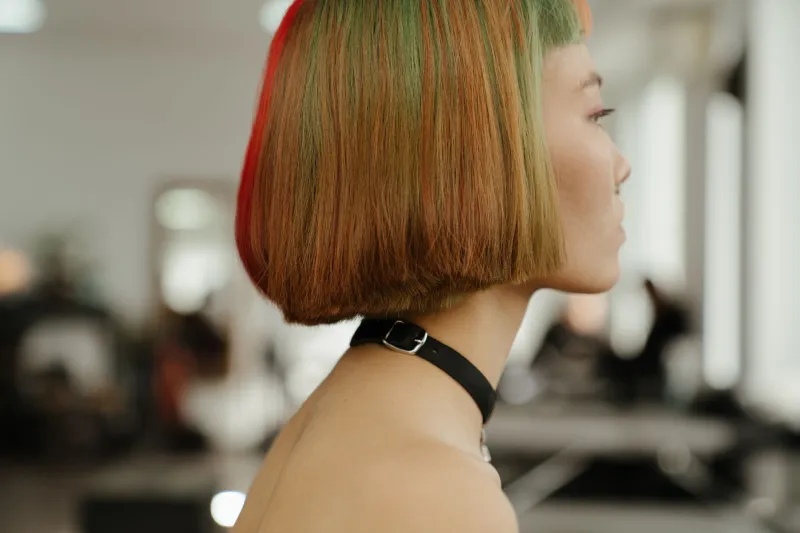
Photo: Michael-Lee Mahachi, CC BY-SA 4.0, via Wikimedia Commons
Walk into the average American salon and you already know what you'll find: white walls, a shelf of retail products arranged with corporate precision, a water feature murmuring somewhere, maybe a eucalyptus towel if you're lucky. It's pleasant. It's inoffensive. It's also completely forgettable — and a growing number of the country's best stylists are done with it.
Something more interesting is taking its place.
The Death of Beige
The old spa aesthetic was built on a simple idea: make the salon feel like a neutral, calming void where anyone could feel comfortable. In practice, it made every salon feel like every other salon. The same playlist. The same succulents. The same promise of "luxury" that, after the fifth identical lobby, stops meaning anything.
The new wave — visible in cities like Los Angeles, Chicago, and Nashville — rejects all of that. These spaces have opinions. One wall covered in local art. A playlist that sounds like the stylist's actual life, not a licensing-safe algorithm. Lighting that flatters the hair rather than the real estate listing.
And the stylists? They're not presented as interchangeable service providers. They're billed like artists. Some specialize so distinctly — precision bobs, lived-in color, editorial texture — that clients fly in from other states for a specific pair of hands.
Your Cut Is a Commission, Not a Transaction
Here's the part that matters most to you, the client: this shift changes what you should expect from the experience.
In the old model, you booked an appointment. You got a service. You left. In the new model, you're commissioning work. You're sitting in someone's studio, and their aesthetic — their taste, their signature, their point of view — is part of what you're paying for.
This rewards a different kind of client. Not the one who wants to be invisible and processed, but the one who says, "I chose you because of the work you do." When you pick a stylist for their signature style, the consultation changes. It becomes a collaboration between two people with taste, not a customer filling out a form.
How to Spot a Studio (Not a Salon)
So how do you know if you've found one of these places? A few tells:
The stylist's own hair is the portfolio. In a studio culture, stylists wear their point of view. If everyone's personal style is as considered as the work on their feed, you're in the right place.
The space looks like someone. Not a brand — a person. Art on the walls that wasn't ordered in bulk. Furniture with a history. A playlist with a personality.
They turn work down. This is the big one. A stylist with a signature style will occasionally tell you they're not the right fit for what you want — and recommend someone who is. That's not arrogance. That's a point of view with integrity.
Why This Is Good for Everyone
Skeptics will say this is just marketing — salons rebranding as "studios" to charge more. And sure, some of it is. But the underlying shift is real and, I'd argue, healthy. It pushes stylists to develop actual signatures instead of generic competence. It pushes clients to engage with their hair as something worth having opinions about. And it pushes the industry away from the beige middle, where nobody risks anything and nobody remembers anything.
The salon chair has always been a creative seat. It just took the industry a while to decorate accordingly.
So the next time you're due for a cut, skip the place with the water feature and find the place with a point of view. Bring a reference, bring a question, bring an opinion of your own. You're not buying a haircut anymore. You're commissioning a piece — and wearing it out the door.