Hand Over the Scissors: Inside the Rise of the Stylist's-Choice Appointment
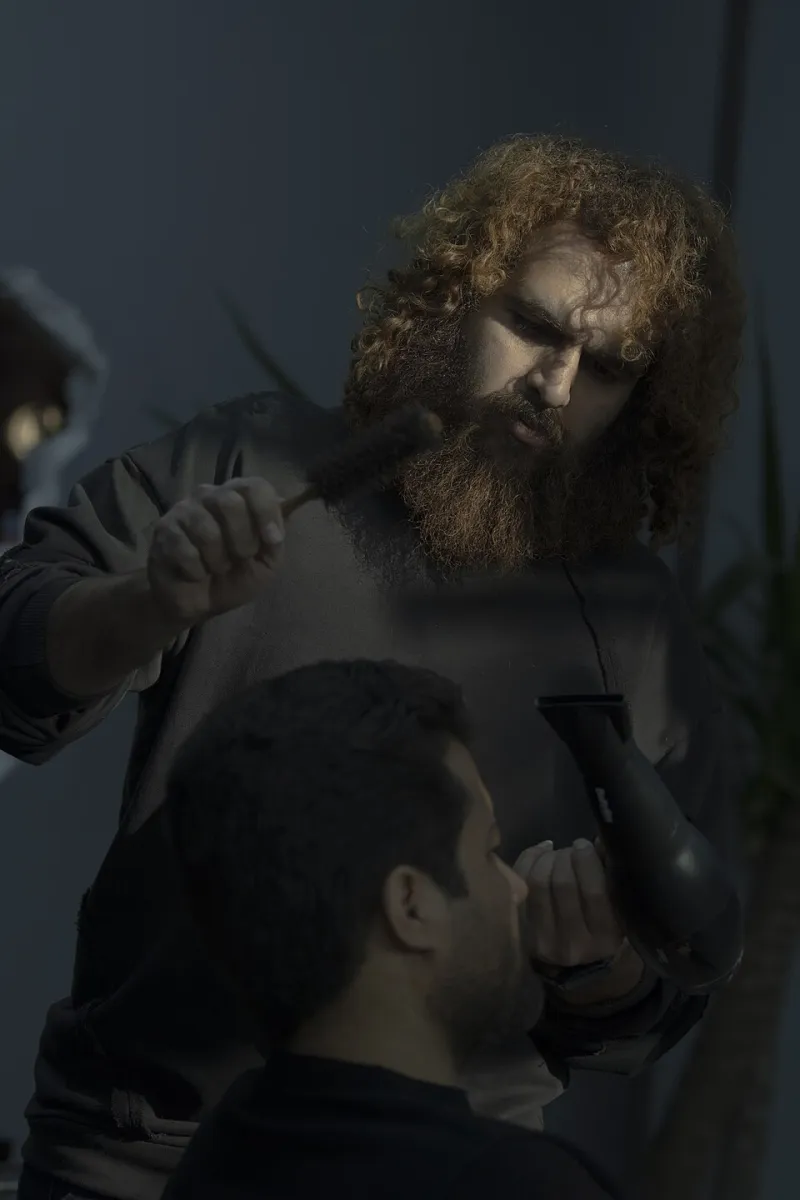
Photo: Mostafameraji, CC0, via Wikimedia Commons
The intake form at a certain Denver studio has a line that stops first-timers cold. Under 'What are we doing today?' clients are invited to write one of two things: their idea, or the words 'stylist's choice.'
Those who write the second option are, effectively, booking blind. Cut, color, styling — all of it decided by the person holding the shears. No Pinterest board. No reference photo. No veto.
It sounds terrifying. It's also quietly becoming one of the more interesting trends in American salons, and the people who do it can't seem to stop talking about it.
Three Chairs, Three Leaps of Faith
Marcus, 34, project manager. Marcus hadn't had a haircut he liked since college. He'd spent years cycling between the same cautious trim, describing his frustration as 'paying $60 to be disappointed politely.' When his new stylist suggested he hand over the reins entirely, he agreed mostly out of exhaustion. The result: a textured crop with a subtle taper that his stylist chose because — as she explained afterward — his hair's growth pattern and his actual morning routine (he owns no styling products) made anything high-maintenance a lie. 'She cut for the guy I actually am, not the guy I was pretending to be,' he says. He's rebooked through spring.
Priya, 28, nurse. Priya worked nights, had a newborn, and told her stylist plainly: 'I don't have the energy to want anything. Pick for me.' She walked out with a shoulder-grazing blunt cut and a gloss that warmed up her natural color — decisions made, she later learned, in the first ninety seconds of their consultation, based on how her hair fell and how little time she'd admit to having. 'It was the first appointment where I left with less to do, not more,' she says.
Dee, 51, small-business owner. Dee's case is the boldest: she gave her stylist of two years full control, including color. The stylist took her three shades lighter with a soft copper, a move Dee says she'd never have permitted herself. 'I'd been coloring my own hair the same brown since the Obama administration. She saw something I'd stopped looking at.'
The Psychology of Letting Go
There's a reason handing over control feels both frightening and liberating. Stylists and the clients who do this describe the same dynamic: most of us carry a fixed image of ourselves — often one that's a decade out of date — and every haircut request is filtered through it. 'I want a bob' really means 'I want to look like the version of myself I remember.'
When the client stops directing, the stylist works from evidence instead of nostalgia: how the hair actually grows, how it actually behaves, how the person actually lives. The gap between the cut you ask for and the cut you need, well-documented in every salon in America, largely disappears.
There's also a trust component that mirrors other parts of modern life. We let algorithms pick our music and strangers cook our food to spec. Delegating a haircut is, in a sense, the same instinct — outsourcing a decision to someone with better information. Except this person can see the back of your head.
It Only Works Under One Condition
Every stylist interviewed for this piece drew the same line: stylist's choice is not the absence of consultation. It's a deeper one. Before a single snip, the good ones ask about lifestyle, maintenance tolerance, workplace norms, past hair trauma ('the bangs incident of 2016'), and deal-breakers. Dee's stylist knew she had a board meeting the following week. Marcus's knew he'd sooner cancel a haircut than buy pomade.
'Full creative control is a privilege you earn with questions,' one veteran stylist put it. 'If a stylist says yes to stylist's choice without asking you anything first, that's not trust. That's a red flag.'
What It Says About Us
Maybe the most telling part of the trend is who's drawn to it: people at transition points. New jobs, new cities, post-breakup, postpartum, post-everything. When your own sense of self is under construction, handing the mirror to someone else — someone trained, someone with taste and distance — can be a relief.
The cut you didn't choose can end up being the first one that actually feels like you. Which raises an uncomfortable little question: if a professional can see it and you can't, what else are you not seeing?
Worth booking blind to find out.