The Tools Behind the Art: What Every Great Stylist Knows About Their Shears That You Probably Don't
If you've ever watched a skilled stylist work — really watched — you've probably noticed something. The way they hold their shears. The almost unconscious way they adjust their grip between cuts. The specific pair they reach for when switching from bulk removal to detail work. There's intention behind every single movement, and a lot of that intention starts with the tools themselves.
At Artful Shear, we're obsessed with the intersection of craft and creativity. And nothing embodies that intersection more literally than the scissors in a stylist's kit. So let's get into it.
Not All Shears Are Created Equal — Not Even Close
Walk into any professional beauty supply store and you'll find shears ranging from $30 to well over $1,000. That price gap isn't just marketing. It reflects enormous differences in steel quality, blade geometry, ergonomic design, and longevity.
For clients, this matters more than you might think. A dull or poorly balanced pair of shears doesn't just make the stylist's job harder — it can actually cause more damage to the hair shaft, leaving ends with microscopic splits even on a fresh cut.
"The blade is doing the real work," explains Jordan Castillo, a master stylist and educator based in Nashville who has been collecting and testing professional shears for over fifteen years. "When I switched from mid-range to Japanese steel shears early in my career, I could immediately feel the difference in the cut. The hair just falls cleaner. There's no dragging, no pushing. It glides."
Steel Stories: Why the Metal Matters
The two dominant materials in professional shear manufacturing are Japanese steel and German steel, and stylists tend to have strong opinions about both.
Japanese steel — particularly the highly regarded Hitachi ATS-314 and similar alloys — is prized for its hardness and ability to hold an incredibly fine edge. Shears made from this steel tend to be lighter, with a sharper initial blade angle, making them ideal for precision cuts and detailed work around the face.
German steel, by contrast, is slightly softer but more durable under heavy daily use. Shears crafted from German alloys tend to hold up well in high-volume environments and are often favored by stylists who do significant amounts of blunt cutting.
"I have both in my kit," says Castillo. "I reach for my Japanese pair when I'm doing a structured bob or anything with a really defined perimeter. My German pair comes out when I'm moving fast through a lot of hair and need something that can take a beating without losing its edge as quickly."
There are also newer entries in the market — Damascus steel shears, for instance, which are as much collector's items as working tools — and high-end titanium-coated options that offer corrosion resistance for stylists working in humid climates.
Blade Types: The Geometry of a Clean Cut
Beyond material, blade design plays a massive role in how a shear performs. Here's a quick breakdown of the main types you'll encounter:
Beveled Edge (Hamaguri): The most common blade style, featuring a convex grind that creates a razor-sharp, smooth-cutting edge. These are the workhorses of most professional kits — versatile, precise, and well-suited to slide cutting and point cutting techniques.
Serrated Edge: One or both blades have micro-serrations that grip the hair slightly during cutting. Great for beginners or for working with very slippery, fine hair, though they don't produce quite as clean a finish as convex blades.
Offset Handle Design: Not a blade type per se, but worth mentioning — offset handles (where the thumb ring sits lower than the finger ring) reduce wrist and forearm strain dramatically. For stylists cutting eight to ten hours a day, this ergonomic detail can mean the difference between a long career and a repetitive stress injury.
Thinning Shears, Texturizing Shears, and the Tools You Don't See Coming
Straight cutting shears are just the beginning. A fully equipped stylist's kit also includes:
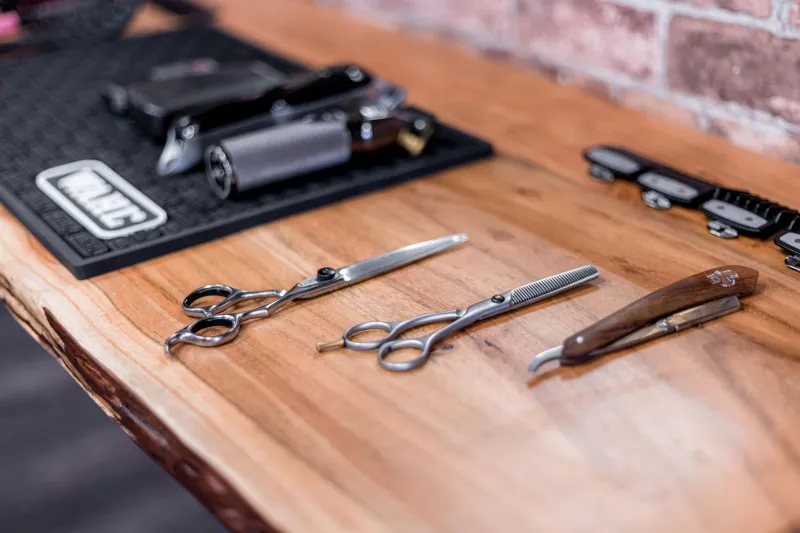
- Thinning shears (also called blending shears): One straight blade, one serrated. Used to reduce bulk and soften lines without removing length. The number of teeth determines how much hair is removed per cut — fewer teeth means more aggressive thinning.
- Chunking shears: Wide-toothed texturizing tools that create dramatic, chunky texture effects. Popular in editorial and fashion-forward styling.
- Razor combs: A hybrid tool that combines a comb with a replaceable razor blade, used to create soft, feathered ends.
Lena Park, a creative stylist and session worker who's prepped talent for editorial shoots in New York and LA, describes her texturizing shears as "the secret weapon nobody talks about." "You can take a haircut from good to interesting with the right texturizing shear," she says. "It adds movement and life. A cut that sits flat suddenly has personality."
Caring for Your Tools Like the Investment They Are
Professional shears are not throw-away items. A quality pair, properly maintained, can last a decade or more. Here's how working stylists keep their tools in top shape:
Oil regularly. A single drop of shear oil at the pivot point after every few uses keeps the tension smooth and prevents rust buildup. It takes ten seconds and extends the life of the shear significantly.
Get them sharpened professionally. Shears should be sharpened by a certified sharpener — not just anyone with a grinding wheel. Improper sharpening can permanently alter the blade angle and ruin an expensive pair. Most working stylists have their shears sharpened every three to six months depending on volume.
Store them properly. Never toss shears loose in a drawer or bag. A dedicated case or roll protects the blades from nicks and keeps the tips safe.
Check the tension. The tension screw controls how the blades glide against each other. Too loose and the shear will fold hair rather than cut it. Too tight and it strains the hand. A properly tensioned shear should hold its own weight when one blade is lifted — it shouldn't snap shut.
Why This All Matters to You, the Client
You might be reading this thinking: "Cool, but why do I care what kind of steel my stylist uses?" Fair question.
Here's the answer: the condition of a stylist's tools directly affects the health of your hair and the precision of your cut. A stylist who invests in quality shears and maintains them with care is making a statement about their standards — for their craft, and for you.
At Artful Shear, we believe that great hair is the result of great skill applied with great tools. The artistry and the instrument are inseparable. Next time you sit down in the chair, take a look at what your stylist reaches for. You might just see the craft a little differently.