The Real Math Behind a $150 Haircut (And Why It's Not a Rip-Off)
Let's talk about the number that makes people gulp at the front desk: $150 for a cut. On paper, it can feel hard to justify. It's hair. It grows back. So why does a high-end salon charge what it charges?
Because almost none of that money is going where you think it is.
Follow the Money: A Rough Breakdown
Every salon's numbers differ, but a typical split at a quality boutique looks something like this:
The stylist's cut: 40–60%. That's gross, not net. From their share, most stylists cover their own taxes, health insurance, tools, and often their own continuing education. That $150 haircut might net a seasoned stylist $60–75 before expenses — for a service that took 90 minutes plus prep and cleanup.
Rent and overhead: 20–30%. Prime retail space in a city isn't cheap. Add utilities, insurance, laundry, booking software, and the espresso machine everybody pretends isn't costing money.
Products and backbar: 5–10%. The shampoo, the treatments, the styling products used on you — that's all inventory, and professional-grade product isn't drugstore product.
The rest: marketing, front-desk staff, credit card fees, and the unglamorous machinery of running a small business.
The Shears Cost More Than Your Laptop
Here's the detail that surprises people most: professional shears are genuinely expensive, and legitimately so.
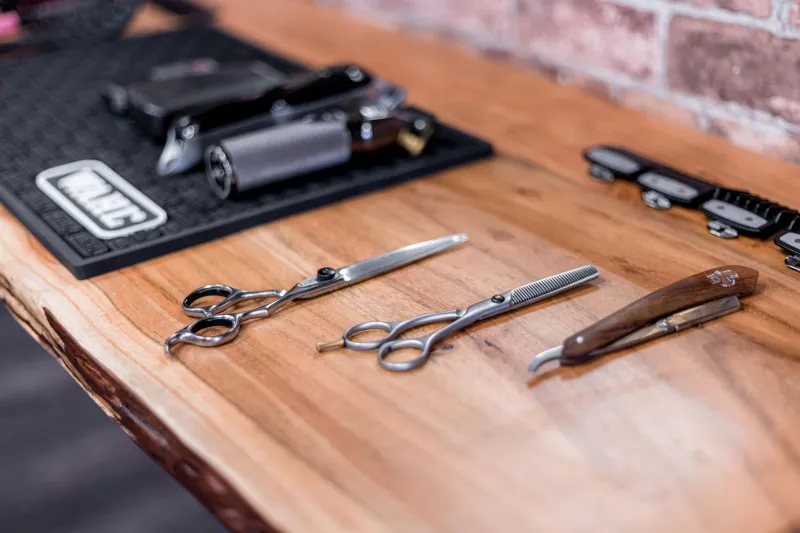
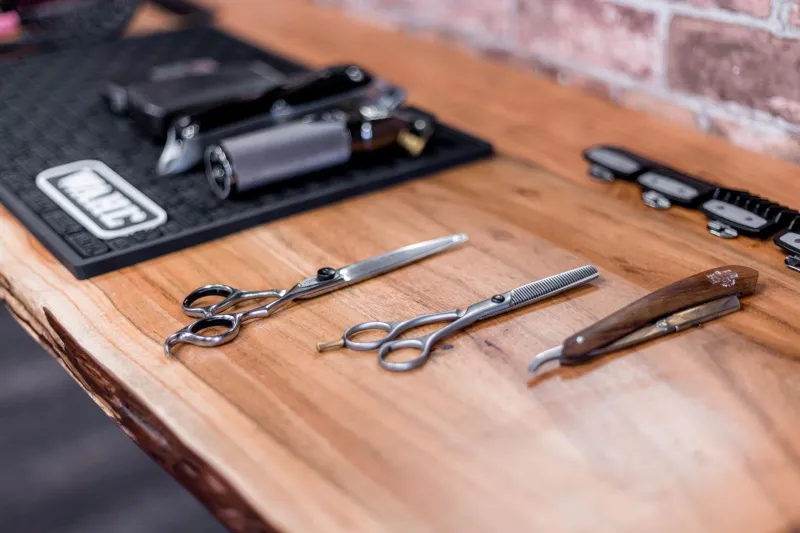
A quality pair of Japanese or German steel shears from a respected maker runs $400 to well over $1,000. High-end forged steel — the kind that holds an edge through thousands of precise cuts — can cost as much as a decent laptop. And those shears need regular sharpening and servicing by specialists, which runs another few hundred dollars a year.
A stylist might own multiple pairs for different techniques: texturizing shears, long-blade shears for scissor-over-comb, dedicated pairs for dry cutting. This is the artisan's toolkit. A carpenter doesn't frame a house with a dollar-store hammer.
The Education You Never See
Boutique salons are obsessive about training, and clients benefit without ever knowing it's happening.
Stylists at serious salons routinely fly to New York, LA, or London for advanced cutting courses. They attend in-salon workshops on their days off. They practice on mannequin heads at home. A single advanced course can run $500 to $2,000 — and a stylist might do several a year.
Why does this matter to you? Because the reason a great dry cut falls perfectly on day three without any effort is that someone spent a weekend learning the geometry behind it. You're not paying for an hour of someone's time. You're paying for a decade of accumulated skill, refined every year.
The Price of Not Being a Chain
There's also a business-model premium. Boutique salons don't operate on volume. A chain salon might book a stylist every 30 minutes; an artisan salon might book 90-minute appointments with buffer time for consultation. Fewer clients per day means each appointment has to carry more weight.
That's also the point. You're buying the consultation. The unhurried conversation about your hair's growth patterns, your cowlick, the one side that behaves differently than the other. You're buying a cut designed for your head, not a formula executed on it.
So How Do You Make the Money Count?
A few ways to get the most from a premium appointment:
- Book strategically. A great cut grows out beautifully for 8–12 weeks. Stretching the interval is where the value lives.
- Ask for styling instruction. Spend the last ten minutes learning how to recreate the blowout at home. It's included, and most clients never ask.
- Buy the products your stylist recommends — not because they're on commission (many aren't), but because the cut was designed with those textures in mind.
- Tip your stylist, not just the salon. That 20% goes mostly directly to the person who memorized your cowlick map.
The Bottom Line
A $150 haircut isn't $150 for an hour of scissors. It's your share of the steel, the education, the rent, the expertise, and the quiet luxury of an appointment that isn't rushed. Sticker shock is understandable. But once you see the math, the number starts to look less like a splurge — and more like what it actually is: paying a skilled craftsperson a living wage to do artisanal work on your head.