Lost in Translation: Closing the Gap Between the Cut You Want and the Cut You Get

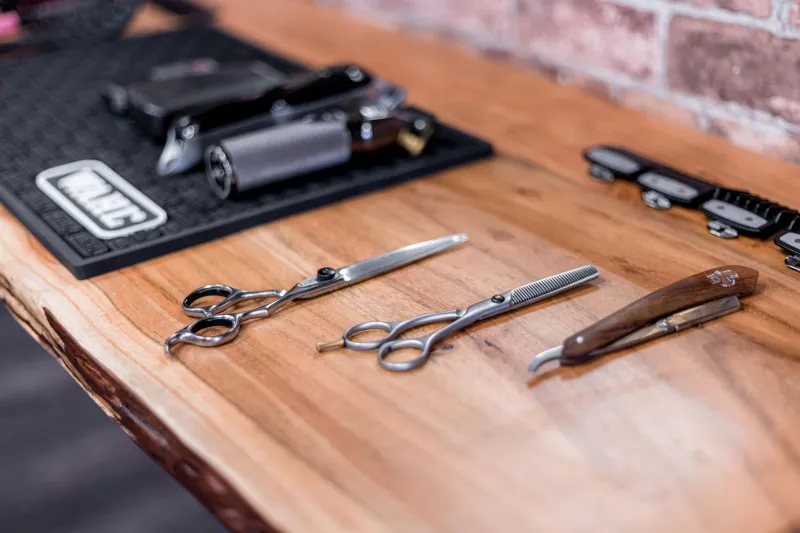
Photo by Photo by Giorgio Trovato on Unsplash on Unsplash
You did everything right. You saved the photo. You rehearsed what you were going to say. You sat down in the chair, explained your vision clearly — or at least it felt clear — and then watched in the mirror as the cut slowly became something you didn't quite recognize. Not a disaster, maybe. But not it, either.
This experience is so common it's practically a rite of passage. And while it's easy to walk away frustrated, the truth is that miscommunication between clients and stylists is almost never about bad intentions on either side. It's about two people operating with completely different frames of reference, using the same words to mean very different things. Once you understand how that happens, you can start doing something about it.
The Photo Problem (And Why It's More Complicated Than It Looks)
Bringing a photo to your salon appointment is genuinely helpful — but it comes with a catch that most clients don't think about. When you show your stylist a picture of a haircut you love, you're both looking at the same image. But you're not necessarily seeing the same thing.
You might be drawn to the overall vibe — the effortless, tousled energy of the cut, the way it frames the face. Your stylist is looking at the technical structure: the layer placement, the graduation, the weight distribution, the likely texture of that particular model's hair. These are two very different conversations happening simultaneously, and they don't always connect.
The fix is to go one layer deeper when you share a photo. Instead of just handing over your phone and saying "I want this," try describing what specifically you love about it. Is it the length? The movement? The way the ends look? The volume at the crown? Being specific about what's actually drawing you to that image helps your stylist understand not just what to cut, but why you want it — which is incredibly useful information when your hair texture or face shape differs from the person in the photo.
The Language Gap Is Real
Hair terminology is a minefield of words that mean completely different things to different people. "A little off the length" is probably the most classic example — to a client, that might mean half an inch. To a stylist who's been trained to interpret "a little" more liberally, it could mean two inches. Neither person is wrong. They're just working from different internal scales.
The same problem shows up with words like "layers," "volume," "textured," and especially "natural." When a client says they want something natural-looking, they might mean effortlessly polished. Or they might mean genuinely undone. Or they might mean they want to embrace their natural texture. Without more context, a stylist is essentially guessing.
One of the most useful things you can do before your next appointment is to replace vague descriptors with more concrete ones. Instead of "I want it to look natural," try "I want a cut that air-dries well and doesn't need a lot of product." Instead of "just a trim," try "I want to keep the shape exactly as it is, just clean up the ends — maybe a quarter inch." The more specific and concrete you can get, the less room there is for interpretation.
Questions Worth Asking Before the Scissors Come Out
Most clients wait for the stylist to ask questions, which is fine — but you're allowed to be proactive. In fact, asking a few targeted questions before any cutting starts can completely change the quality of the result.
Start with: "Can you tell me what you're planning to do before you do it?" This sounds simple, but it's incredibly powerful. Having your stylist walk you through their approach — where they're planning to take length, how they're thinking about layers, what technique they'll use — gives you a chance to catch any misalignment before it's permanent.
Another good one: "What do you think might not work about what I'm describing, given my hair type?" This invites honest feedback. A great stylist will tell you if the cut you're asking for is going to fight your natural texture, require more maintenance than your lifestyle allows, or simply not suit your face shape. That kind of candor is a gift, even when it's not what you want to hear.
Finally, ask about the grow-out. "What's this going to look like in six weeks?" Cuts behave very differently at different stages of growth, and knowing what to expect helps you feel more in control of the process.
Building Trust Over Time
Some of the best client-stylist relationships take a few appointments to really click. The first visit is almost always partly about information gathering — your stylist is learning your hair, your lifestyle, your aesthetic preferences, and your communication style all at once. It's a lot.
If you had a cut that didn't quite land, don't necessarily write the stylist off. Consider going back and being even more specific about what you wanted versus what you got. A good stylist will appreciate the feedback and use it to recalibrate. The conversation that happens after a disappointing cut is often what sets the stage for a great one.
That said, if you consistently feel unheard or like your input isn't being incorporated, it might genuinely be time to try someone new. The right stylist-client relationship should feel collaborative — like you're both working toward the same vision, even when the path to get there requires some back and forth.
The Bottom Line
Great haircuts are a two-way street. The artistry lives on the stylist's side of the chair, but the clarity has to come from yours. The more precisely you can communicate what you want — not just the look, but the feeling, the lifestyle fit, the specific elements that matter most — the better equipped your stylist is to actually deliver it. And when that connection clicks, the result is something neither of you could have gotten to alone.