Sixty Minutes, Zero Judgment: The Unspoken Therapy of the Salon Chair
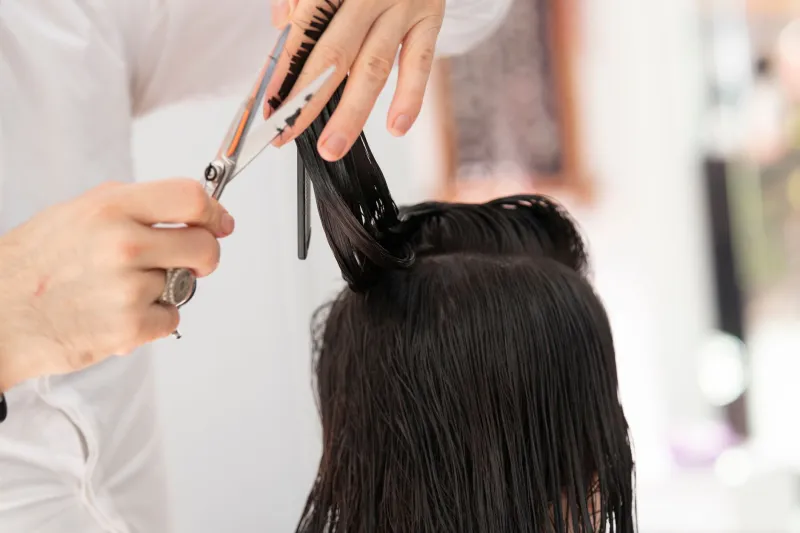
There's a particular kind of honesty that only happens under a salon cape. You sit down, the cape snaps behind your neck, the water starts running — and somewhere between the shampoo bowl and the first snip of the shears, you find yourself explaining your divorce. Your job situation. The thing you said at Thanksgiving you're still not over.
If this sounds familiar, congratulations: you've participated in one of America's most enduring, least discussed rituals. The salon chair confessional.
The Chair Is a Confession Booth With Better Lighting
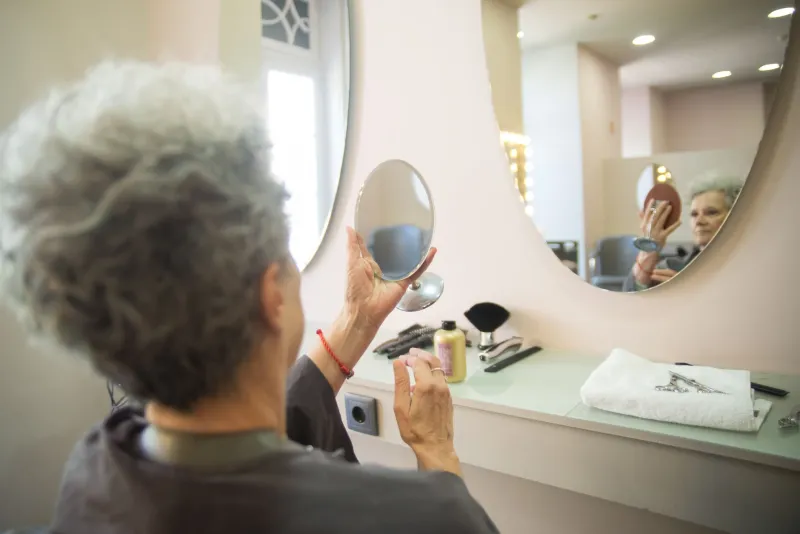
There's actual psychology behind why this happens. You're not facing your stylist — you're both looking at the mirror, side by side, which creates a curious sense of talking alongside someone rather than at them. Therapists have known for decades that people open up more in cars and on walks for exactly this reason: no eye contact, no pressure.
Add in the physical intimacy of the situation — someone touching your head, studying your face for an hour — and the barriers drop fast. You're captive. They're captive. Neither of you can leave. Something about that arrangement makes the truth come out.
"People tell me things their spouses don't know," says Dana, a stylist with fifteen years behind the chair in Chicago. "I've heard about affairs before the affair partner knew. I've heard about job offers before the boss. You learn pretty quickly that your job is 20% cutting and 80% holding space."
Part Artist, Part Accidental Counselor
Here's the thing the best stylists understand: a haircut is one of the most vulnerable things a person can do. You're handing someone scissors and saying, change how I look at myself. Clients arrive at the salon before big interviews, after breakups, on the heels of a cancer diagnosis in remission or a baby or a move across the country. The cut is never just a cut. It's a marker.
That's why great stylists develop a kind of emotional radar. They know the difference between a client who wants to vent and a client who wants silence. They know that "just do whatever you think" sometimes means exactly that, and sometimes means please read my mind because I can't say it out loud.
But — and every stylist I spoke with was emphatic about this — they are not therapists. And they don't want to be.
Where the Line Sits
So what are the rules of the road? Stylists tend to draw the boundaries in a few places:
- Listen, don't diagnose. A stylist can hear about your anxiety without telling you what to do about it.
- Keep it in the chair. What's said under the cape stays under the cape. Most stylists treat client confessions with the same discretion as a priest or a bartender.
- Redirect when it gets heavy. If a conversation turns toward trauma that clearly needs a professional, a good stylist will gently steer things back to — of all things — hair. It's a kindness, not a dismissal.
- Never gossip. The fastest way to lose a client's trust is to repeat what another client said. The salon grapevine is real, and the pros opt out of it.
One stylist in Portland put it this way: "I'm a safe room, not a solution. People usually aren't looking for advice. They're looking for someone who won't flinch."
What Clients Should Bring — and What to Leave at the Door
If you're a serial chair-sharer, a little etiquette goes a long way:
Do read the room. If your stylist is chatty, match their energy. If they're focused and quiet, that's your permission to just enjoy the quiet.
Do feel free to say "I'm not really in a talking mood today." Nobody worth their shears will take it personally. Honestly, most stylists love those appointments.
Don't use your stylist as a stand-in for actual mental health support. They care about you, but they also have three more clients at two o'clock and their own lives to carry.
Don't overshare so intensely that your stylist can't do their job. Precision work requires concentration — a stylist doing a razor-sharp bob while you narrate a custody battle is having a very long day.
The Real Reason We Keep Coming Back
Maybe the chair confessional endures because it's one of the last regularly scheduled hours of undivided attention an adult gets in American life. No phones (your hands are under a cape). No multitasking. Just you, a mirror, and someone whose entire job is making you feel like the best version of yourself.
Is it therapy? No. But is it healing in its own small, scissors-adjacent way? Ask anyone who's walked out of a salon with a fresh cut and a lighter heart.
The cape comes off. The secret stays. And you walk out the door looking better than when you came in — which, if we're being honest, is its own kind of medicine.